
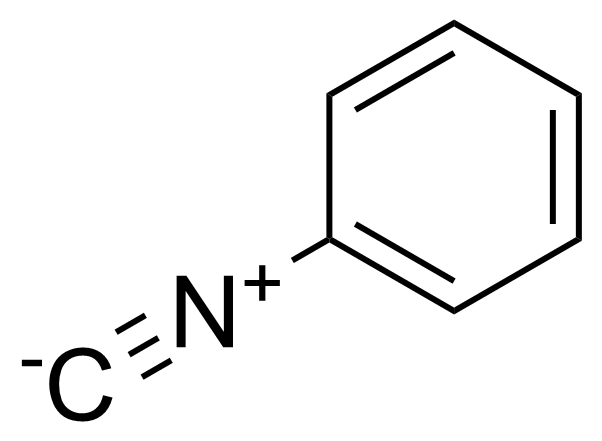
Phenyl isocyanide
For more information or to place an inquiry, please email us to
georganics@georganics.sk or use our contact form
Pack Sizes & Pricing
Georganics offers flexible supply options for customers requiring anything from gram-scale quantities for research and development through to multi-kilogram shipments for industrial applications. Prices are available upon request and are based on product specification, quantity, packaging requirements, and delivery destination.
Please get in touch and our team will provide a tailored quotation. Please email us to georganics@georganics.sk or use our contact form
Specification
Structural identification
Regulatory Information

H301 – Toxic if swallowed
H311 – Toxic in contact with skin
H315 – Causes skin irritation
H319 – Causes serious eye irritation
P260 – Do not breathe dust/fume/gas/mist/vapours/spray:
P280 – Wear protective gloves/protective clothing/eye protection/face protection:
P301+310 – IF SWALLOWED: Immediately call a POISON CENTER or doctor/physician
P302+352 – IF ON SKIN: Wash with soap and water
P304+340 – IF INHALED: Remove victim to fresh air and keep at rest in a position comfortable for breathing
P305+351+338 – IF IN EYES: Rinse cautiously with water for several minutes. Remove contact lenses if present and easy to do – continue rinsing
Product categorization
Description
Phenyl isocyanide (also known as isocyanobenzene; CAS 931-54-4) is an aromatic isocyanide characterized by a highly reactive isocyano (−NC) functional group attached to a phenyl ring. It is a colorless liquid with a strong, pungent odor and exhibits significant toxicity, moisture sensitivity, and corrosive properties, requiring careful handling under controlled conditions.
Industrially, phenyl isocyanide is commonly prepared through dehydration of N-substituted formamides, yielding the corresponding isocyanide. Its exceptional reactivity makes it an important synthetic intermediate in organic and medicinal chemistry.
The compound is particularly valuable in isocyanide-based multicomponent reactions (IMCRs), including the well-known Passerini and Ugi reactions, which enable the rapid construction of structurally diverse and highly functionalized molecules from simple starting materials. These transformations have made phenyl isocyanide a useful reagent in the synthesis of pharmaceutical candidates, biologically active heterocycles, and complex molecular scaffolds.
Chemical classification: Aromatic isocyanide; benzene derivative; versatile building block for multicomponent synthetic methodologies.
Original article: Phenyl isocyanide – preparation and application
Similar products
| Product name | Structure | CAS# | G-code | |
|---|---|---|---|---|
| Benzyl isocyanide | 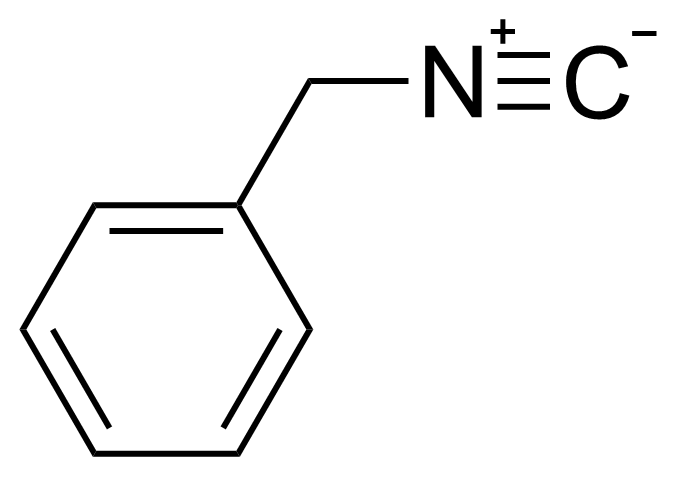 | [10340-91-7] | GEO-02805 | |
| 4-Chlorophenyl isocyanide | 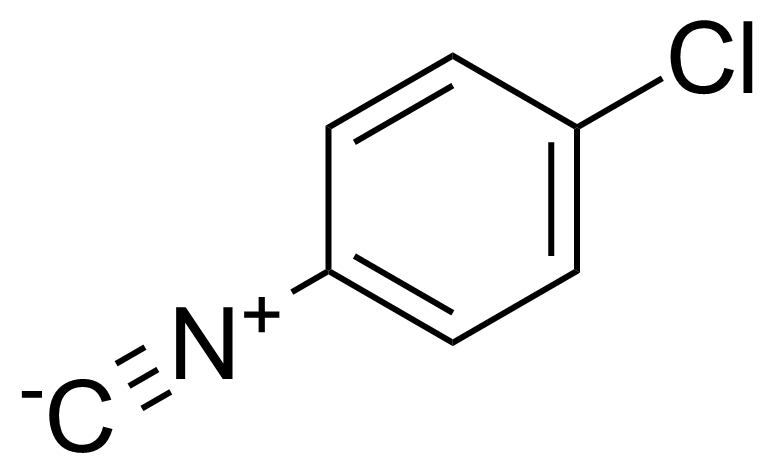 | [1885-81-0] | GEO-03705 | |
| 3-Chlorophenyl isocyanide | 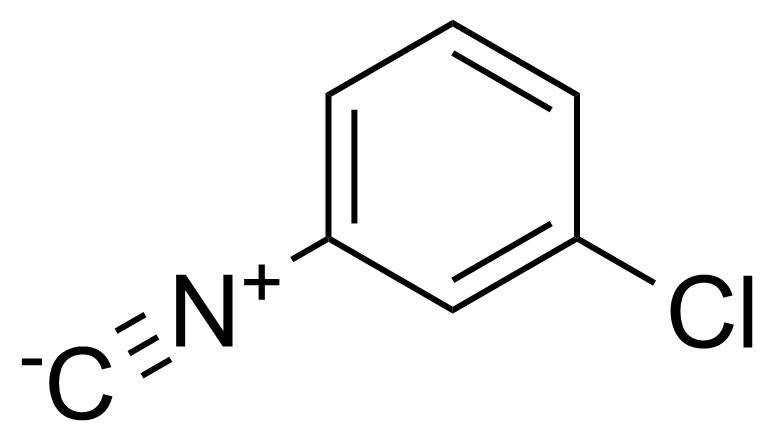 | [32686-54-7] | GEO-03704 | |
| Cyclohexyl isocyanide | 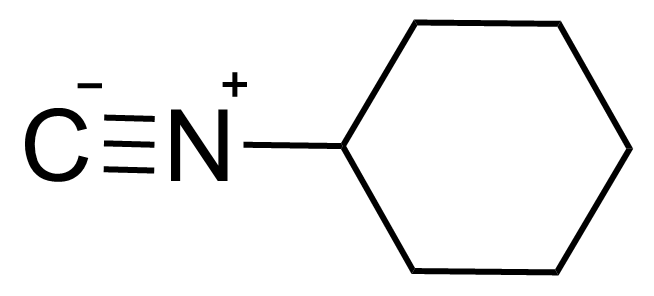 | [931-53-3] | GEO-00871 | |
| Cyclopentylisocyanide | 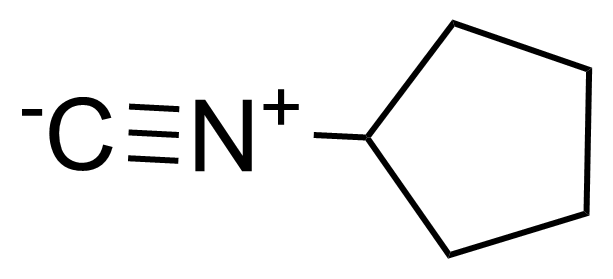 | [68498-54-4] | GEO-02903 | |
| 3,5-Difluoro-1-(isocyanomethyl)benzene | 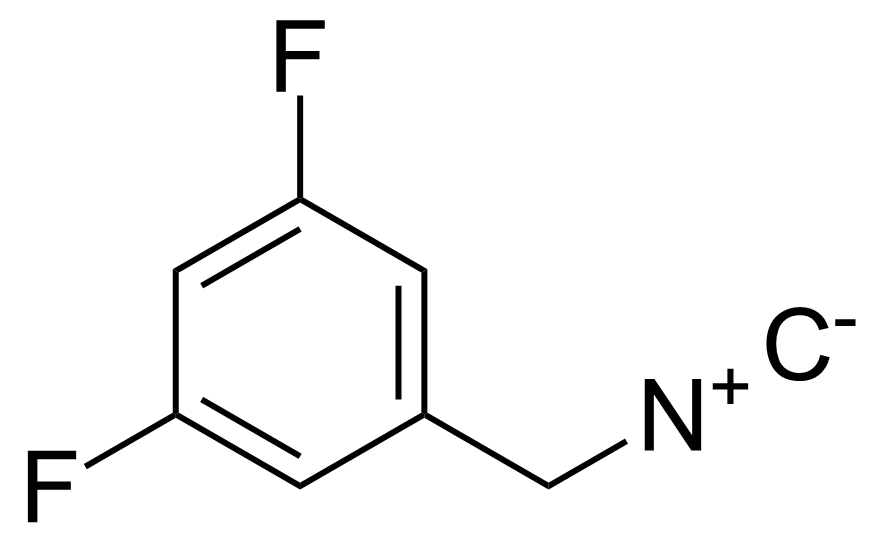 | N/A | GEO-03696 | |
| 2,4-Difluoro-1-(isocyanomethyl)benzene | 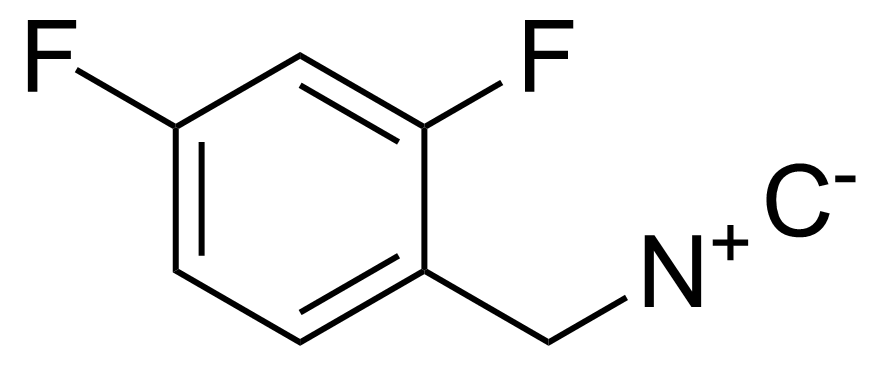 | [730964-55-3] | GEO-03698 | |
| (S)-(-)-alpha-Methylbenzyl isocyanide | 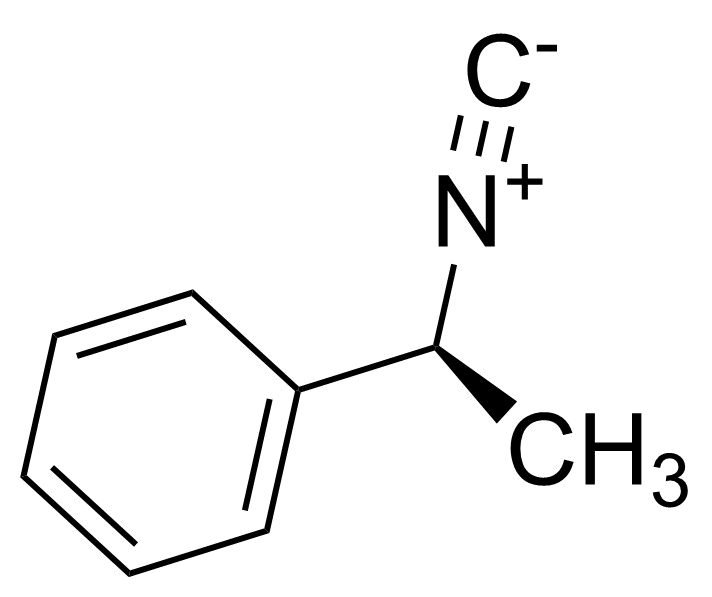 | [21872-32-2] | GEO-03775 | |
| a-Methylbenzyl isocyanide | 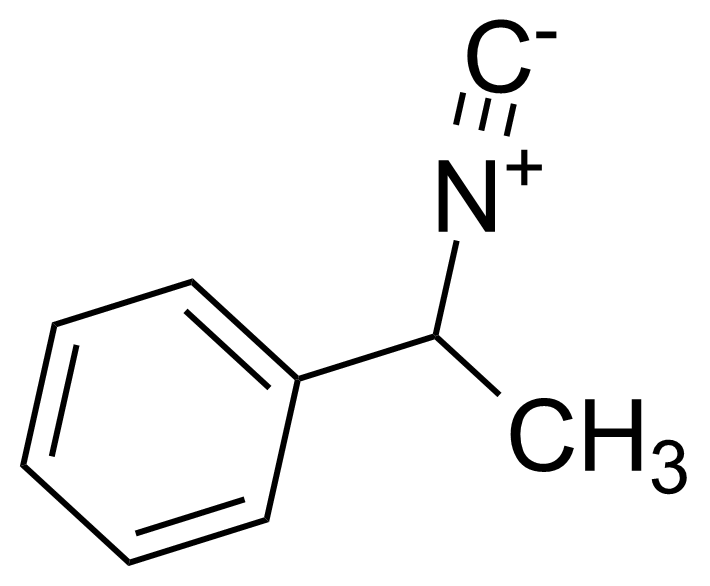 | [17329-20-3] | GEO-01780 | |
| Methyl 2-isocyanoacetate | 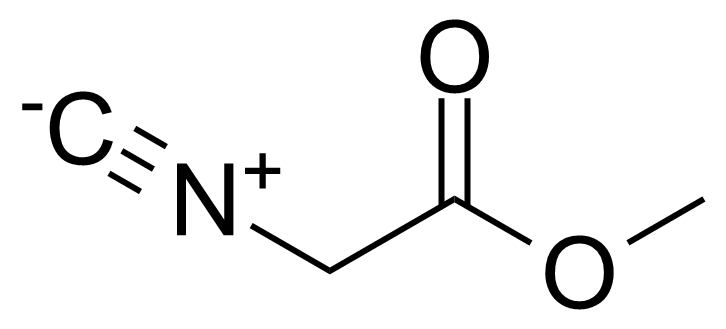 | [39687-95-1] | GEO-03019 |